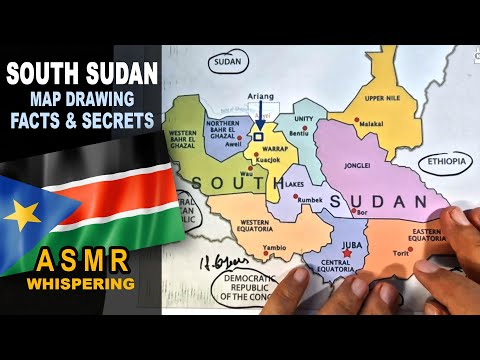
ASMR: Map of SUDAN tracing with facts | Facts and Highlights [ASMR maps and facts]

ASMR maps and facts! Sudan Republic has a legacy history dating back to ancient civilizations such as the Kingdom of Kush and later being influenced by Egyptian, Roman, and Arab cultures. ASMR whispering facts
#asmrfacts #asmrgeography #geographyfacts #geography #asmrwhispering #whisperedfacts
#khartoum #sudan #sudanconflict #sudanese #sudanes
Linguistic Diversity: Sudan is incredibly diverse linguistically, with over 100 languages spoken throughout the country. Arabic is the official language, but numerous indigenous languages are also spoken, including Beja, Nubian, Fur, and others.
Pyramids: Sudan is home to more pyramids than Egypt, particularly in the ancient city of Meroë. The pyramids of Meroë are UNESCO World Heritage Sites and date back to the Kingdom of Kush, which ruled over the region from around 2500 BCE to 1500 CE.
Longest River: The Nile, the longest river in the world, flows through Sudan. The convergence of the White Nile and the Blue Nile occurs in the Sudanese capital of Khartoum. The Nile has played a significant role in the country's history and culture.
Diverse Cultures: Sudan is ethnically and culturally diverse, with over 500 ethnic groups inhabiting the country. These groups have their own unique traditions, languages, and customs, contributing to Sudan's rich cultural tapestry.
Oil Production: Sudan is one of Africa's leading oil producers, with significant reserves located mainly in the southern regions of the country. Oil exports play a crucial role in Sudan's economy, although the industry has also been a source of conflict.
Historical Civilizations: Sudan has been home to several ancient civilizations, including the Kingdom of Kush, which flourished along the Nile River thousands of years ago. The Kingdom of Kush was known for its advanced civilization, trade networks, and architectural achievements.
Diverse Religions: While Islam is the dominant religion in Sudan, there are also significant Christian and indigenous African religious communities. The country's religious diversity has contributed to its cultural richness and heritage.
Cuisine: Sudanese cuisine is diverse and reflects the country's cultural influences. Staple foods include millet, sorghum, and wheat, which are used to make bread and porridge. Ful medames, a dish made from fava beans, is a popular breakfast food, while stews and grilled meats are common for lunch and dinner.
Traditional Music and Dance: Sudanese music encompasses a wide range of styles, from traditional folk music to modern pop and hip-hop. Traditional instruments such as the tambour, oud, and rababa are often used in Sudanese music, accompanied by intricate dance performances.
Nubian Architecture: The Nubian people, who inhabit northern Sudan and southern Egypt, have a distinctive architectural style characterized by mud-brick houses with flat roofs. Nubian villages along the Nile River are known for their vibrant colors and unique geometric patterns.
These facts offer just a glimpse into the diverse and fascinating country of Sudan, which boasts a rich cultural heritage and a complex history shaped by its diverse peoples and geographical features.
map credit: JRC, European Commission, CC BY 4.0, via Wikimedia Commons
Last updated: